1. Workshops & Encounters
〰️
2. Films & Fragments
〰️
3. Video Essays
〰️
4. Immersive Experiences
〰️
5. Articles
〰️
6. Online Community Games
〰️
1. Workshops & Encounters 〰️ 2. Films & Fragments 〰️ 3. Video Essays 〰️ 4. Immersive Experiences 〰️ 5. Articles 〰️ 6. Online Community Games 〰️
Meeting those who read the ground.
Documentary filmmaking is at the origin of Followly. The project was initiated by a filmmaker with a background in anthropology and a journalist working in audiovisual production. From the beginning, the documentary form appeared as the most direct way to engage with the people, practices and landscapes that shape the world of tracking.
Today, Followly develops a diversity of documentary forms, embracing a deliberately fragmentary approach. Some films take the shape of portraits, focusing on individual practitioners and their personal trajectories. Others are structured as conversations, allowing different perspectives to emerge through dialogue. Some explore specific territories, while others extend toward broader reflections on perception, ecology and society.
2. Films & fragments
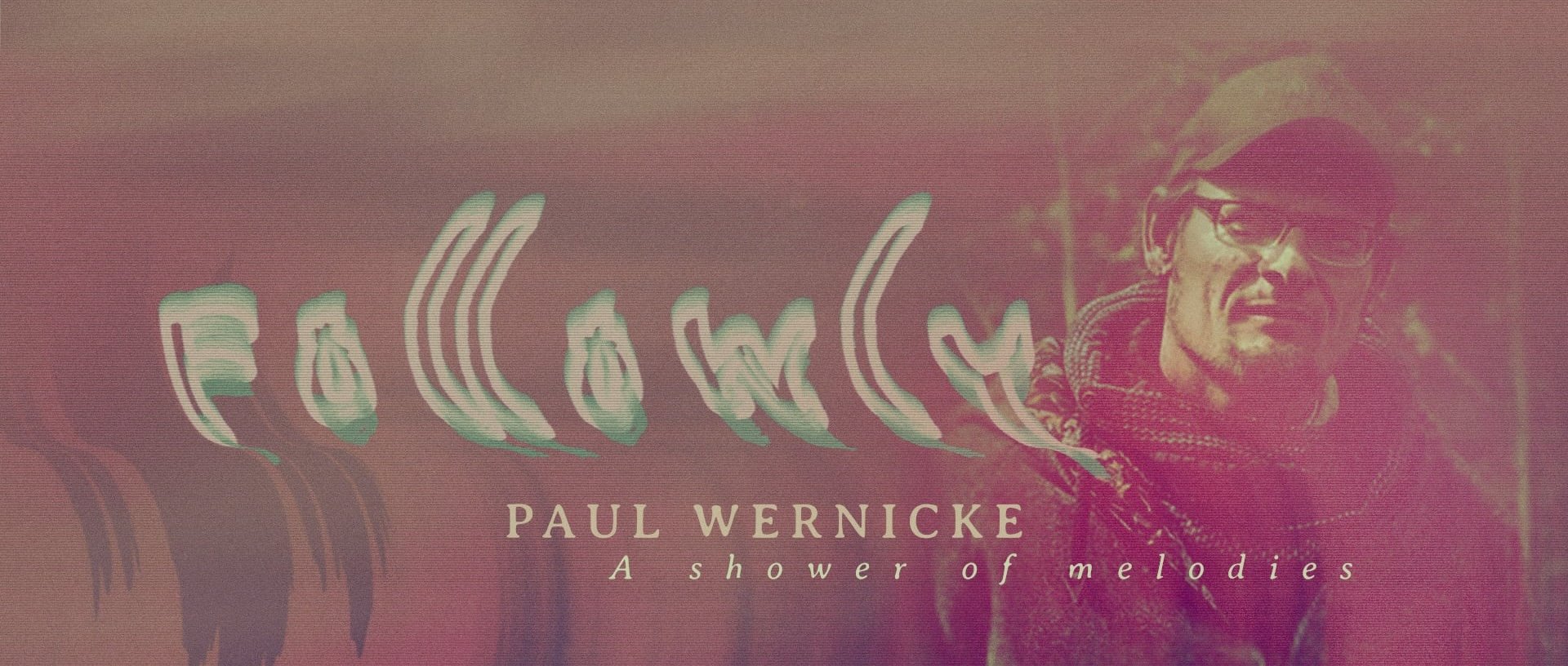
Paul Wernicke at the International Tracking Symposium (The Netherlands, March 2025)
Followly does not aim to produce a single, unified representation of tracking. Instead, the project returns again and again to the same subject through a multiplicity of perspectives.
This approach reflects a simple assumption: that knowledge is always situated, partial and embodied. And rather than reducing this multiplicity, Followly chooses to expose it as a diffracted landscape.
What unites these films? The intention to remain close to the practice. That’s why each fragment finds its own form in response to the encounter from which it emerges. For example, we have a collection of short pieces called “Approach”, each focusing on the singularity of a tracking habit, where explaining the “how?” tells us far more about the “why?” behind the practice.
Tracking Our Own Assumptions
Each fragment expresses (implicitly or explicitly) a position towards the relationship between humans, animals, plants, environments and other forces. Each contribution carries its own way of blurring, defining or negociating the boundary between what is called “nature”, “culture”, “living” and “non-living”. By placing these perspectives side by side, Followly allows these differences to become visible and perceptible. This is where the project takes on its ecopoetic dimension.
This reflects the nature of the project itself: multiple, situated and diffracted. Like a changing landscape where fragments accumulate without closing, this website is a place one can return to, each time encountering a different configuration of the same questions.
Through this exploration, Followly also raises a broader hypothesis: that the dispersed community of trackers across Europe may share a particular sensibility? Ultimately, Followly asks a simple question:
What might the quiet observers of the ground reveal about the place humans occupy within the living world?
Beyond the general public, Followly can be used by educators, artists, researchers, and institutions to immerse themselves in an evolving ecopoetic field of experiences, interpretations and perceptions.
This approach is developed further in our third type of project: video essays that seek to foster a dialogue between art and science, poetry and philosophy. Here, however, we document the creative processes behind them.